HTTP 200 OK
Allow: GET, POST, HEAD, OPTIONS
Content-Type: application/json
Vary: Accept
{
"links": {
"next": "https://microlib.io/api/microstructure/?format=api&page=3",
"previous": "https://microlib.io/api/microstructure/?format=api",
"first": "https://microlib.io/api/microstructure/?page=1",
"last": "https://microlib.io/api/microstructure/?page=7"
},
"total": 79,
"page": 2,
"page_size": 12,
"number_pages": 7,
"results": [
{
"id": 62,
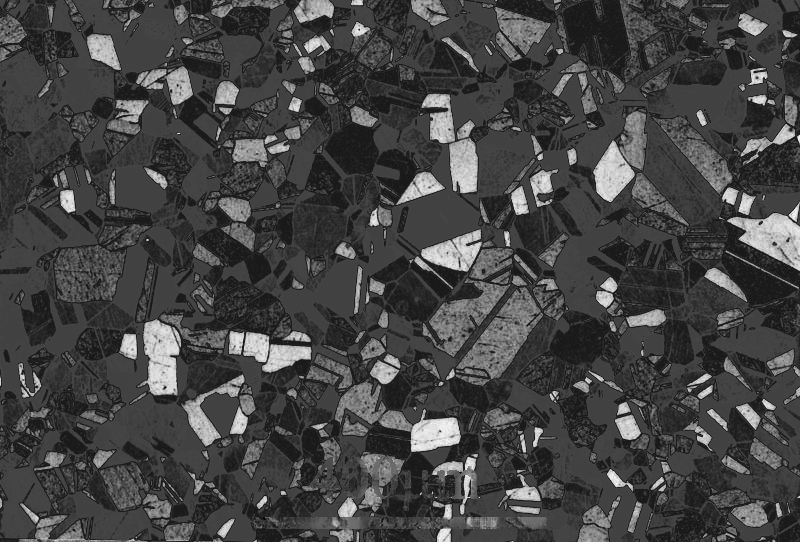
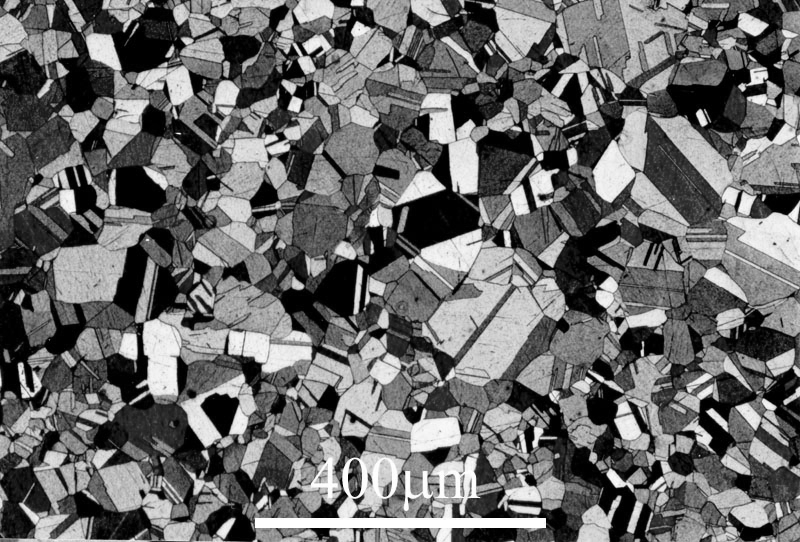
"name": "Microstructure 429",
"short_name": "microstructure429",
"data_type": 2,
"technique": 1,
"keyword": [
1,
3,
7,
28,
29,
33,
74
],
"category": [
1
],
"element": [
2,
8
],
"brief_description": "Cu 70, Zn 30 (wt%), recrystallised - annealing twins",
"long_description": "Annealing causes the alloy to recrystallise and grow. This results in a single a phase containing annealing twins.",
"contributor": "Dr R F Cochrane",
"organisation": "Department of Materials, University of Leeds",
"last_updated": "2025-11-23T18:31:15.472881Z",
"link_doitpoms": "https://www.doitpoms.ac.uk/miclib/full_record.php?id=429",
"data_3D": "https://microstructure-library.s3.eu-west-2.amazonaws.com/microstructure429/microstructure429.tif",
"data_2D": "https://microstructure-library.s3.eu-west-2.amazonaws.com/microstructure429/microstructure429_inpainted.png",
"data_2D_original": "https://microstructure-library.s3.eu-west-2.amazonaws.com/microstructure429/microstructure429_original.png",
"preview": "https://microstructure-library.s3.eu-west-2.amazonaws.com/microstructure429/microstructure429.mp4",
"inpaint_movie": "https://microstructure-library.s3.eu-west-2.amazonaws.com/microstructure429/microstructure429_inpaint.mp4",
"long_movie": "https://microstructure-library.s3.eu-west-2.amazonaws.com/microstructure429/microstructure429_long.mp4",
"generator": "https://microstructure-library.s3.eu-west-2.amazonaws.com/microstructure429/microstructure429_Gen.pt",
"params": "https://microstructure-library.s3.eu-west-2.amazonaws.com/microstructure429/microstructure429_params.data",
"vox_size": 1.3745704467353952,
"rating": 3,
"barbox": [
[
247,
451
],
[
547,
528
]
],
"barcol": [
255,
70
],
"phases": [],
"downloads": 57
},
{
"id": 22,
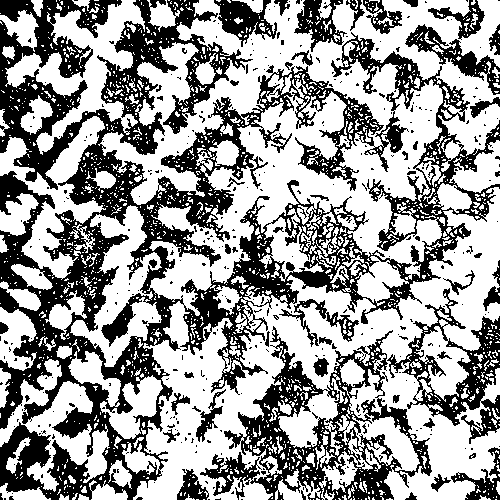
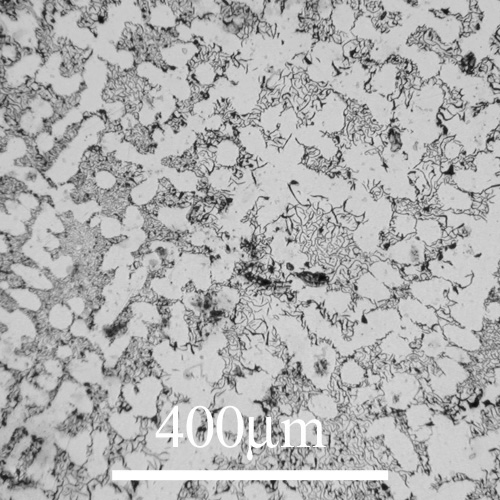
"name": "Microstructure 072",
"short_name": "microstructure072",
"data_type": 1,
"technique": 1,
"keyword": [
1,
4,
7,
12,
19,
45,
48
],
"category": [
1
],
"element": [
5,
6,
7,
12,
15,
16,
17,
18,
19
],
"brief_description": "Ni-hard iron",
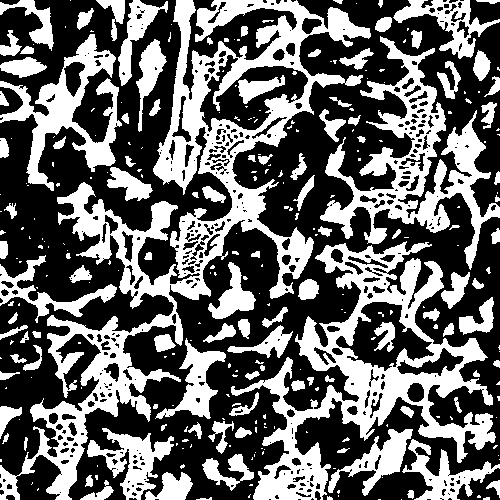
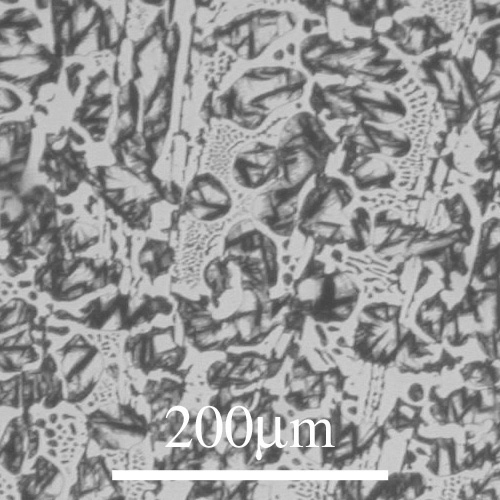
"long_description": "This is a Ni-hard iron, one of the first cast irons to be developed. These white irons contain Ni to ensure that the austenite transforms to martensite following heating and chromium to increase the hardness of the eutectic carbide.Ni-hard irons are normally stress relieved at 200-300 °C for approximately four hours to relieve the martensitic transformation stresses and to promote the transformation of retained austenite. The structure consists of proeutectic austenite dendrites containing martensitic needles with interdendritic austenite-martensite/carbide eutectic.",
"contributor": "Prof T W Clyne",
"organisation": "Department of Materials Science and Metallurgy, University of Cambridge",
"last_updated": "2025-09-24T09:12:35.545316Z",
"link_doitpoms": "https://www.doitpoms.ac.uk/miclib/full_record.php?id=72",
"data_3D": "https://microstructure-library.s3.eu-west-2.amazonaws.com/microstructure072/microstructure072.tif",
"data_2D": "https://microstructure-library.s3.eu-west-2.amazonaws.com/microstructure072/microstructure072_inpainted.png",
"data_2D_original": "https://microstructure-library.s3.eu-west-2.amazonaws.com/microstructure072/microstructure072_original.png",
"preview": "https://microstructure-library.s3.eu-west-2.amazonaws.com/microstructure072/microstructure072.mp4",
"inpaint_movie": "https://microstructure-library.s3.eu-west-2.amazonaws.com/microstructure072/microstructure072_inpaint.mp4",
"long_movie": "https://microstructure-library.s3.eu-west-2.amazonaws.com/microstructure072/microstructure072_long.mp4",
"generator": "https://microstructure-library.s3.eu-west-2.amazonaws.com/microstructure072/microstructure072_Gen.pt",
"params": "https://microstructure-library.s3.eu-west-2.amazonaws.com/microstructure072/microstructure072_params.data",
"vox_size": 1.444043321299639,
"rating": 7,
"barbox": [
[
101,
399
],
[
392,
484
]
],
"barcol": [
255,
139
],
"phases": [
175,
178
],
"downloads": 2
},
{
"id": 26,
"name": "Microstructure 161",
"short_name": "microstructure161",
"data_type": 1,
"technique": 4,
"keyword": [
50,
51
],
"category": [
2
],
"element": [
14
],
"brief_description": "Glass ceramic, heat treated at 750°C for 3 hours",
"long_description": "Glass ceramics are materials that are cooled from the melt in the form of a glass, and then heat treated to induce controlled crystallisation of the glass. Heterogeneous nucleation is carried out at a temperature to maximise the nucleation rate (common nucleating agents include TiO2 and ZrO2), and the temperature is then raised sufficiently to cause the nuclei formed to grow rapidly. Glass ceramics are strong, reasonably tough, transparent to IR radiation, have a low coefficient of thermal expansion, a high resistance to thermal shock and a low thermal conductivity, which makes them very useful in domestic applications such as cookware and cooker hobs. The most common glass ceramic system is LAS (Li2O-Al2O3-SiO2), but others include MgO-Al2O3-SiO2, Na2O-BaO-Al2O3-SiO2, and Li2O-MgO-Al2O3-SiO2.",
"contributor": "Dr K M Knowles",
"organisation": "Department of Materials Science and Metallurgy, University of Cambridge",
"last_updated": "2025-09-23T07:47:40.208718Z",
"link_doitpoms": "https://www.doitpoms.ac.uk/miclib/full_record.php?id=161",
"data_3D": "https://microstructure-library.s3.eu-west-2.amazonaws.com/microstructure161/microstructure161.tif",
"data_2D": "https://microstructure-library.s3.eu-west-2.amazonaws.com/microstructure161/microstructure161_inpainted.png",
"data_2D_original": "https://microstructure-library.s3.eu-west-2.amazonaws.com/microstructure161/microstructure161_original.png",
"preview": "https://microstructure-library.s3.eu-west-2.amazonaws.com/microstructure161/microstructure161.mp4",
"inpaint_movie": "https://microstructure-library.s3.eu-west-2.amazonaws.com/microstructure161/microstructure161_inpaint.mp4",
"long_movie": "https://microstructure-library.s3.eu-west-2.amazonaws.com/microstructure161/microstructure161_long.mp4",
"generator": "https://microstructure-library.s3.eu-west-2.amazonaws.com/microstructure161/microstructure161_Gen.pt",
"params": "https://microstructure-library.s3.eu-west-2.amazonaws.com/microstructure161/microstructure161_params.data",
"vox_size": 0.8333333333333334,
"rating": 9,
"barbox": [
[
444,
376
],
[
583,
418
]
],
"barcol": [
255,
330
],
"phases": [
80,
84
],
"downloads": 8
},
{
"id": 25,
"name": "Microstructure 160",
"short_name": "microstructure160",
"data_type": 1,
"technique": 3,
"keyword": [
50,
51
],
"category": [
2
],
"element": [
14
],
"brief_description": "Glass ceramic, heat treated at 750° C for 3 hours",
"long_description": "Glass ceramics are materials that are cooled from the melt in the form of a glass, and then heat treated to induce controlled crystallisation of the glass. Heterogeneous nucleation is carried out at a temperature to maximise the nucleation rate (common nucleating agents include TiO2 and ZrO2), and the temperature is then raised sufficiently to cause the nuclei formed to grow rapidly. Glass ceramics are strong, reasonably tough, transparent to IR radiation, have a low coefficient of thermal expansion, a high resistance to thermal shock and a low thermal conductivity, which makes them very useful in domestic applications such as cookware and cooker hobs. The most common glass ceramic system is LAS (Li2O-Al2O3-SiO2), but others include MgO-Al2O3-SiO2, Na2O-BaO-Al2O3-SiO2, and Li2O-MgO-Al2O3-SiO2.",
"contributor": "Dr K M Knowles",
"organisation": "Department of Materials Science and Metallurgy, University of Cambridge",
"last_updated": "2025-09-24T11:03:07.083341Z",
"link_doitpoms": "https://www.doitpoms.ac.uk/miclib/full_record.php?id=160",
"data_3D": "https://microstructure-library.s3.eu-west-2.amazonaws.com/microstructure160/microstructure160.tif",
"data_2D": "https://microstructure-library.s3.eu-west-2.amazonaws.com/microstructure160/microstructure160_inpainted.png",
"data_2D_original": "https://microstructure-library.s3.eu-west-2.amazonaws.com/microstructure160/microstructure160_original.png",
"preview": "https://microstructure-library.s3.eu-west-2.amazonaws.com/microstructure160/microstructure160.mp4",
"inpaint_movie": "https://microstructure-library.s3.eu-west-2.amazonaws.com/microstructure160/microstructure160_inpaint.mp4",
"long_movie": "https://microstructure-library.s3.eu-west-2.amazonaws.com/microstructure160/microstructure160_long.mp4",
"generator": "https://microstructure-library.s3.eu-west-2.amazonaws.com/microstructure160/microstructure160_Gen.pt",
"params": "https://microstructure-library.s3.eu-west-2.amazonaws.com/microstructure160/microstructure160_params.data",
"vox_size": 0.819672131147541,
"rating": 9,
"barbox": [
[
447,
366
],
[
577,
405
]
],
"barcol": [
255,
330
],
"phases": [
93,
93
],
"downloads": 8
},
{
"id": 29,
"name": "Microstructure 188",
"short_name": "microstructure188",
"data_type": 1,
"technique": 1,
"keyword": [
50,
52,
57,
58
],
"category": [
2
],
"element": [
14
],
"brief_description": "Part of a Denby pottery mug",
"long_description": "On firing, water trapped within the clay evaporates as the temperature rises. Vitrification occurs above about 1000ºC, and the clay material fuses into a dense glassy material. Aluminium silicate crystals bond the matrix, increasing the strength, and the object shrinks and becomes more dense. Glaze is then applied, which vitrifies when the object is fired again, and bonds to the surface making it waterproof.",
"contributor": "Dr K M Knowles",
"organisation": "Department of Materials Science and Metallurgy, University of Cambridge",
"last_updated": "2025-09-24T11:03:56.560198Z",
"link_doitpoms": "https://www.doitpoms.ac.uk/miclib/full_record.php?id=188",
"data_3D": "https://microstructure-library.s3.eu-west-2.amazonaws.com/microstructure188/microstructure188.tif",
"data_2D": "https://microstructure-library.s3.eu-west-2.amazonaws.com/microstructure188/microstructure188_inpainted.png",
"data_2D_original": "https://microstructure-library.s3.eu-west-2.amazonaws.com/microstructure188/microstructure188_original.png",
"preview": "https://microstructure-library.s3.eu-west-2.amazonaws.com/microstructure188/microstructure188.mp4",
"inpaint_movie": "https://microstructure-library.s3.eu-west-2.amazonaws.com/microstructure188/microstructure188_inpaint.mp4",
"long_movie": "https://microstructure-library.s3.eu-west-2.amazonaws.com/microstructure188/microstructure188_long.mp4",
"generator": "https://microstructure-library.s3.eu-west-2.amazonaws.com/microstructure188/microstructure188_Gen.pt",
"params": "https://microstructure-library.s3.eu-west-2.amazonaws.com/microstructure188/microstructure188_params.data",
"vox_size": 1.1363636363636365,
"rating": 9,
"barbox": [
[
432,
474
],
[
624,
525
]
],
"barcol": [
255,
230
],
"phases": [
119,
123
],
"downloads": 6
},
{
"id": 30,
"name": "Microstructure 189",
"short_name": "microstructure189",
"data_type": 2,
"technique": 5,
"keyword": [
50,
59,
60,
61,
62,
63
],
"category": [
2
],
"element": [
14
],
"brief_description": "Titanate ceramic for immobilising radioactive waste",
"long_description": "An assemblage of 5 mixed oxide phases and at least 2 metals. White phases are metals, either austenites (Fe,Ni,Mo,Ru) or silver. Oxide phases are by contrast: light grey is zirconolite (CaZrTi2O7 with some substituted species); mid grey is hollandite (Ba[Fe,Cr,Ti]8O16) with some Cs on Ba site; dark grey is perovskite loveringite (Ca[Ti,Fe,Cr,Zr]21O38) or spinel ([Fe,Ti,Cr]3O4).",
"contributor": "Dr E Maddrell",
"organisation": "BNFL plc, Sellafield",
"last_updated": "2025-10-28T13:50:06.156747Z",
"link_doitpoms": "https://www.doitpoms.ac.uk/miclib/full_record.php?id=189",
"data_3D": "https://microstructure-library.s3.eu-west-2.amazonaws.com/microstructure189/microstructure189.tif",
"data_2D": "https://microstructure-library.s3.eu-west-2.amazonaws.com/microstructure189/microstructure189_inpainted.png",
"data_2D_original": "https://microstructure-library.s3.eu-west-2.amazonaws.com/microstructure189/microstructure189_original.png",
"preview": "https://microstructure-library.s3.eu-west-2.amazonaws.com/microstructure189/microstructure189.mp4",
"inpaint_movie": "https://microstructure-library.s3.eu-west-2.amazonaws.com/microstructure189/microstructure189_inpaint.mp4",
"long_movie": "https://microstructure-library.s3.eu-west-2.amazonaws.com/microstructure189/microstructure189_long.mp4",
"generator": "https://microstructure-library.s3.eu-west-2.amazonaws.com/microstructure189/microstructure189_Gen.pt",
"params": "https://microstructure-library.s3.eu-west-2.amazonaws.com/microstructure189/microstructure189_params.data",
"vox_size": 0.1,
"rating": 5,
"barbox": [
[
163,
327
],
[
473,
409
]
],
"barcol": [
255,
139
],
"phases": [],
"downloads": 44
},
{
"id": 28,
"name": "Microstructure 186",
"short_name": "microstructure186",
"data_type": 1,
"technique": 1,
"keyword": [
50,
55,
56
],
"category": [
2
],
"element": [
14
],
"brief_description": "Silicon Carbide from within a Silicon Nitride-bonded Silicon Carbide sample",
"long_description": "Silicon Nitride bonded Silicon Carbide is characterized by excellent wear properties, good resistance to high temperatures, good impact resistance, an ability to be easily cast, and good corrosion resistance.",
"contributor": "Dr K M Knowles",
"organisation": "Department of Materials Science and Metallurgy, University of Cambridge",
"last_updated": "2025-09-24T11:02:44.765815Z",
"link_doitpoms": "https://www.doitpoms.ac.uk/miclib/full_record.php?id=186",
"data_3D": "https://microstructure-library.s3.eu-west-2.amazonaws.com/microstructure186/microstructure186.tif",
"data_2D": "https://microstructure-library.s3.eu-west-2.amazonaws.com/microstructure186/microstructure186_inpainted.png",
"data_2D_original": "https://microstructure-library.s3.eu-west-2.amazonaws.com/microstructure186/microstructure186_original.png",
"preview": "https://microstructure-library.s3.eu-west-2.amazonaws.com/microstructure186/microstructure186.mp4",
"inpaint_movie": "https://microstructure-library.s3.eu-west-2.amazonaws.com/microstructure186/microstructure186_inpaint.mp4",
"long_movie": "https://microstructure-library.s3.eu-west-2.amazonaws.com/microstructure186/microstructure186_long.mp4",
"generator": "https://microstructure-library.s3.eu-west-2.amazonaws.com/microstructure186/microstructure186_Gen.pt",
"params": "https://microstructure-library.s3.eu-west-2.amazonaws.com/microstructure186/microstructure186_params.data",
"vox_size": 0.17006802721088435,
"rating": 8,
"barbox": [
[
413,
455
],
[
578,
518
]
],
"barcol": [
255,
360
],
"phases": [
72,
145
],
"downloads": 14
},
{
"id": 27,
"name": "Microstructure 177",
"short_name": "microstructure177",
"data_type": 1,
"technique": 1,
"keyword": [
50,
52,
53,
54
],
"category": [
2
],
"element": [
14
],
"brief_description": "Terracotta pottery",
"long_description": "Terracotta can be made in large shapes due to the fact that a large part of the raw materials has been prefired, so firing shrinkage is low. The characteristic red colour is due to the presence of iron (II) oxide.",
"contributor": "Dr K M Knowles",
"organisation": "Department of Materials Science and Metallurgy, University of Cambridge",
"last_updated": "2025-09-24T11:04:58.259727Z",
"link_doitpoms": "https://www.doitpoms.ac.uk/miclib/full_record.php?id=177",
"data_3D": "https://microstructure-library.s3.eu-west-2.amazonaws.com/microstructure177/microstructure177.tif",
"data_2D": "https://microstructure-library.s3.eu-west-2.amazonaws.com/microstructure177/microstructure177_inpainted.png",
"data_2D_original": "https://microstructure-library.s3.eu-west-2.amazonaws.com/microstructure177/microstructure177_original.png",
"preview": "https://microstructure-library.s3.eu-west-2.amazonaws.com/microstructure177/microstructure177.mp4",
"inpaint_movie": "https://microstructure-library.s3.eu-west-2.amazonaws.com/microstructure177/microstructure177_inpaint.mp4",
"long_movie": "https://microstructure-library.s3.eu-west-2.amazonaws.com/microstructure177/microstructure177_long.mp4",
"generator": "https://microstructure-library.s3.eu-west-2.amazonaws.com/microstructure177/microstructure177_Gen.pt",
"params": "https://microstructure-library.s3.eu-west-2.amazonaws.com/microstructure177/microstructure177_params.data",
"vox_size": 1.0416666666666667,
"rating": 9,
"barbox": [
[
408,
426
],
[
617,
480
]
],
"barcol": [
255,
320
],
"phases": [
77,
120
],
"downloads": 12
},
{
"id": 38,
"name": "Microstructure 228",
"short_name": "microstructure228",
"data_type": 1,
"technique": 1,
"keyword": [
1,
7,
15,
19,
20,
21,
24
],
"category": [
1
],
"element": [
6,
7
],
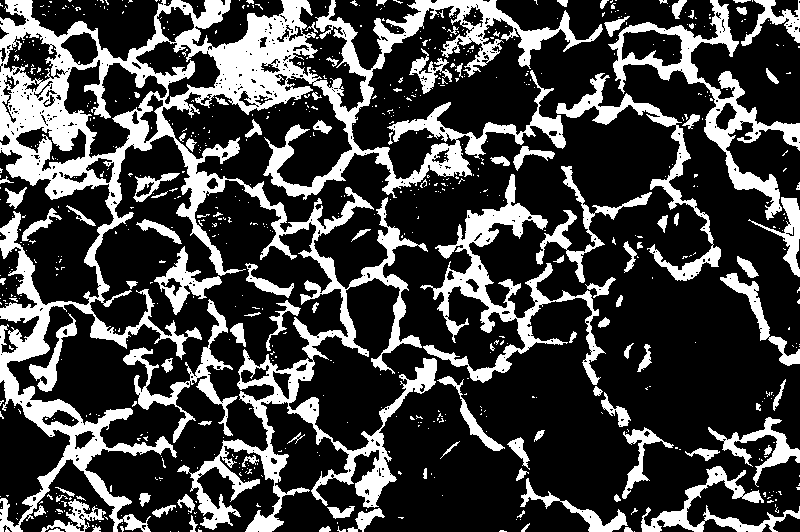
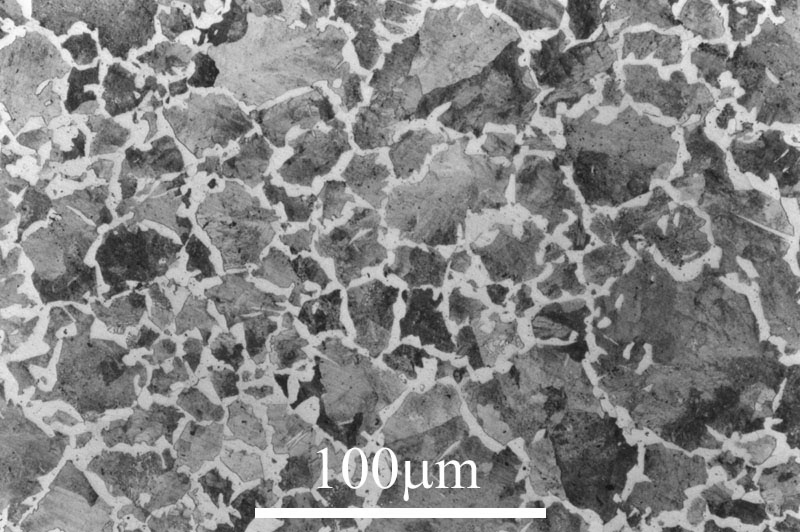
"brief_description": "Normalised steel",
"long_description": "A hypoeutectoid alloy steel, normalised, producing a microstructure of allotriomorphic ferrite nucleated on the prior austenite grain boundaries, with the remainder pearlite.",
"contributor": "Dr R F Cochrane",
"organisation": "Department of Materials, University of Leeds",
"last_updated": "2025-09-22T13:25:33.281301Z",
"link_doitpoms": "https://www.doitpoms.ac.uk/miclib/full_record.php?id=228",
"data_3D": "https://microstructure-library.s3.eu-west-2.amazonaws.com/microstructure228/microstructure228.tif",
"data_2D": "https://microstructure-library.s3.eu-west-2.amazonaws.com/microstructure228/microstructure228_inpainted.png",
"data_2D_original": "https://microstructure-library.s3.eu-west-2.amazonaws.com/microstructure228/microstructure228_original.png",
"preview": "https://microstructure-library.s3.eu-west-2.amazonaws.com/microstructure228/microstructure228.mp4",
"inpaint_movie": "https://microstructure-library.s3.eu-west-2.amazonaws.com/microstructure228/microstructure228_inpaint.mp4",
"long_movie": "https://microstructure-library.s3.eu-west-2.amazonaws.com/microstructure228/microstructure228_long.mp4",
"generator": "https://microstructure-library.s3.eu-west-2.amazonaws.com/microstructure228/microstructure228_Gen.pt",
"params": "https://microstructure-library.s3.eu-west-2.amazonaws.com/microstructure228/microstructure228_params.data",
"vox_size": 0.3448275862068966,
"rating": 5,
"barbox": [
[
246,
439
],
[
549,
518
]
],
"barcol": [
255,
230
],
"phases": [
105,
224
],
"downloads": 9
},
{
"id": 21,
"name": "Microstructure 070",
"short_name": "microstructure070",
"data_type": 1,
"technique": 1,
"keyword": [
1,
4,
7,
18,
19,
43,
46,
47
],
"category": [
1
],
"element": [
6,
7,
12,
15,
16,
17
],
"brief_description": "Silal",
"long_description": "This sample shows the typical structure of silal, irons with high Si content (5.5-7.9 wt%). It is a grey cast iron alloyed with 4-6wt% Si to provide good oxidation resistance. The high Si content forms a dense, adherent iron silicate surface film, which is resistant to oxygen penetration. The flake graphite iron Silal was one of the first heat resisting cast irons developed. Spheroidal graphite Si irons have higher strength and improved ductility. The structure shows cored dendrites of ferrite with interdendritic flake graphite. A few white areas of Si carbide are also present.",
"contributor": "Prof T W Clyne",
"organisation": "Department of Materials Science and Metallurgy, University of Cambridge",
"last_updated": "2025-09-24T09:11:09.323270Z",
"link_doitpoms": "https://www.doitpoms.ac.uk/miclib/full_record.php?id=70",
"data_3D": "https://microstructure-library.s3.eu-west-2.amazonaws.com/microstructure070/microstructure070.tif",
"data_2D": "https://microstructure-library.s3.eu-west-2.amazonaws.com/microstructure070/microstructure070_inpainted.png",
"data_2D_original": "https://microstructure-library.s3.eu-west-2.amazonaws.com/microstructure070/microstructure070_original.png",
"preview": "https://microstructure-library.s3.eu-west-2.amazonaws.com/microstructure070/microstructure070.mp4",
"inpaint_movie": "https://microstructure-library.s3.eu-west-2.amazonaws.com/microstructure070/microstructure070_inpaint.mp4",
"long_movie": "https://microstructure-library.s3.eu-west-2.amazonaws.com/microstructure070/microstructure070_long.mp4",
"generator": "https://microstructure-library.s3.eu-west-2.amazonaws.com/microstructure070/microstructure070_Gen.pt",
"params": "https://microstructure-library.s3.eu-west-2.amazonaws.com/microstructure070/microstructure070_params.data",
"vox_size": 0.7246376811594203,
"rating": 5,
"barbox": [
[
104,
397
],
[
390,
481
]
],
"barcol": [
255,
170
],
"phases": [
147,
198
],
"downloads": 4
},
{
"id": 34,
"name": "Microstructure 211",
"short_name": "microstructure211",
"data_type": 1,
"technique": 1,
"keyword": [
1,
7,
15,
17,
19,
20,
21,
31,
65
],
"category": [
1
],
"element": [
6,
7
],
"brief_description": "Normalised carbon steel",
"long_description": "Low carbon steel with a microstructure consisting mostly of ferrite with the darker pearlite regions around the ferrite grains. Upon cooling the steel the ferrite forms initially, either on austenite grain boundaries or inclusions. This causes carbon to be partitioned into the austenite. Eventually the remaining austenite will be at the eutectoid condition and the transformation to pearlite will then take place. This sample has been normalised, removing the directionality caused by casting",
"contributor": "Dr R F Cochrane",
"organisation": "Department of Materials, University of Leeds",
"last_updated": "2025-09-24T09:12:05.847755Z",
"link_doitpoms": "https://www.doitpoms.ac.uk/miclib/full_record.php?id=211",
"data_3D": "https://microstructure-library.s3.eu-west-2.amazonaws.com/microstructure211/microstructure211.tif",
"data_2D": "https://microstructure-library.s3.eu-west-2.amazonaws.com/microstructure211/microstructure211_inpainted.png",
"data_2D_original": "https://microstructure-library.s3.eu-west-2.amazonaws.com/microstructure211/microstructure211_original.png",
"preview": "https://microstructure-library.s3.eu-west-2.amazonaws.com/microstructure211/microstructure211.mp4",
"inpaint_movie": "https://microstructure-library.s3.eu-west-2.amazonaws.com/microstructure211/microstructure211_inpaint.mp4",
"long_movie": "https://microstructure-library.s3.eu-west-2.amazonaws.com/microstructure211/microstructure211_long.mp4",
"generator": "https://microstructure-library.s3.eu-west-2.amazonaws.com/microstructure211/microstructure211_Gen.pt",
"params": "https://microstructure-library.s3.eu-west-2.amazonaws.com/microstructure211/microstructure211_params.data",
"vox_size": 1.3793103448275863,
"rating": 7,
"barbox": [
[
243,
435
],
[
546,
518
]
],
"barcol": [
255,
410
],
"phases": [
26,
155
],
"downloads": 4
},
{
"id": 37,
"name": "Microstructure 227",
"short_name": "microstructure227",
"data_type": 1,
"technique": 1,
"keyword": [
1,
7,
15,
19,
20,
21,
24
],
"category": [
1
],
"element": [
6,
7
],
"brief_description": "Normalised steel",
"long_description": "A hypoeutectoid alloy steel, normalised, producing a microstructure of allotriomorphic ferrite nucleated on the prior austenite grain boundaries, with the remainder pearlite.",
"contributor": "Dr R F Cochrane",
"organisation": "Department of Materials, University of Leeds",
"last_updated": "2025-09-24T11:02:39.442583Z",
"link_doitpoms": "https://www.doitpoms.ac.uk/miclib/full_record.php?id=227",
"data_3D": "https://microstructure-library.s3.eu-west-2.amazonaws.com/microstructure227/microstructure227.tif",
"data_2D": "https://microstructure-library.s3.eu-west-2.amazonaws.com/microstructure227/microstructure227_inpainted.png",
"data_2D_original": "https://microstructure-library.s3.eu-west-2.amazonaws.com/microstructure227/microstructure227_original.png",
"preview": "https://microstructure-library.s3.eu-west-2.amazonaws.com/microstructure227/microstructure227.mp4",
"inpaint_movie": "https://microstructure-library.s3.eu-west-2.amazonaws.com/microstructure227/microstructure227_inpaint.mp4",
"long_movie": "https://microstructure-library.s3.eu-west-2.amazonaws.com/microstructure227/microstructure227_long.mp4",
"generator": "https://microstructure-library.s3.eu-west-2.amazonaws.com/microstructure227/microstructure227_Gen.pt",
"params": "https://microstructure-library.s3.eu-west-2.amazonaws.com/microstructure227/microstructure227_params.data",
"vox_size": 1.3745704467353952,
"rating": 8,
"barbox": [
[
245,
434
],
[
550,
514
]
],
"barcol": [
255,
50
],
"phases": [
147,
214
],
"downloads": 5
}
]
}